
On this page
- Which gutter problem do you have?
- What causes gutter problems around Kent?
- How does a contractor find the problem?
- What moves the price of a repair?
- When does repair stop making sense?
- Terms you may hear
- What can you check yourself?
- When to schedule repairs
- Repair questions: common questions in Kent
- Notes by community
- What to note for the contractor
Which gutter problem do you have?
Water spilling over the front in a November downpour
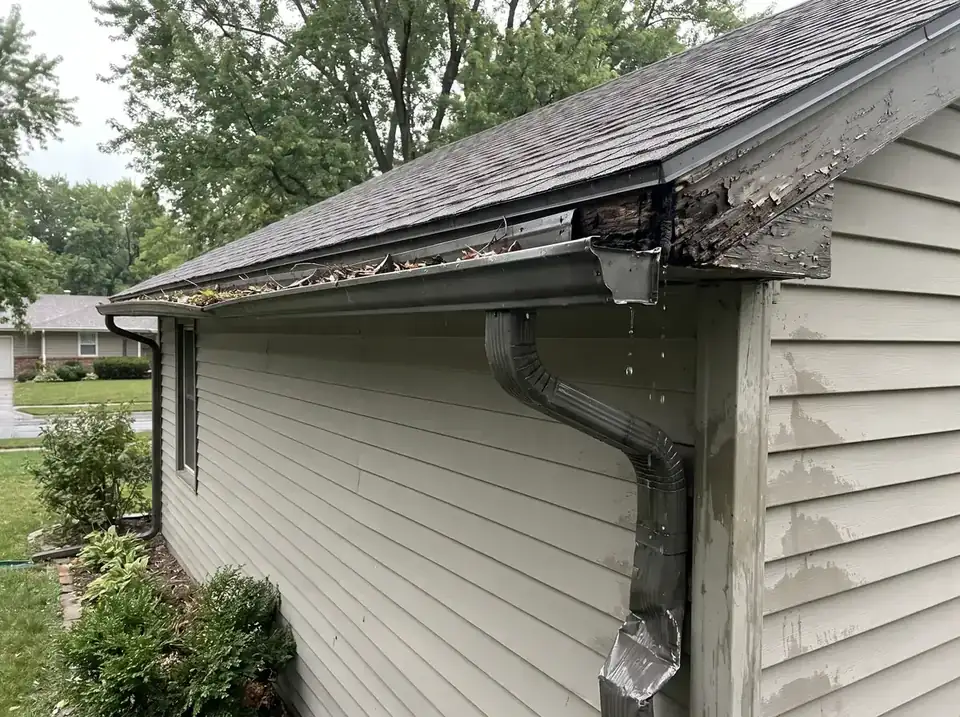
Needles and leaves packed at the outlet, moss in the trough, or a gutter too small for a long winter storm. Heavy-rain overflow
Drips at a corner, seam or end cap
Dried, split sealant. Most joints can be cleaned out, re-riveted and resealed. Leaking gutters
A run leaning out or pulling off the fascia
Loose spikes, the weight of wet needles, snow or ice, or soft wood behind. Sagging gutters
Gutters bent or torn loose after a windstorm
Photograph it from the ground, keep clear of loose metal, fallen limbs and lines, then book an inspection. Storm and wind damage
A downspout backing up or dumping by the wall
Needles, cones or moss in an elbow, or a discharge point too close to the house. Downspout repair
Puddles along the foundation or a wet crawl space
Roof water is landing next to the house instead of being carried away. Downspouts and foundations
What causes gutter problems around Kent?
Duration of rain. Rain falls on about 150 days a year at the Kent station, most of it between October and March. A small leak or a low spot that would barely matter in a dry climate drips for weeks here, staining siding and soaking fascia.
Debris. Where firs, cedars and pines overhang, needles and cones fall all year. Maples and alders add leaves in autumn. Moss on shaded roofs breaks off and washes in, holding water and choking outlets.
Wood. Fascia that never fully dries through winter softens, paint peels, and once the wood goes, fixings let go.
Wind and weight. Windstorms bring down branches and lift loose gutters, and an occasional snowfall loads a gutter already full of wet needles.
| Repair | What is involved | Page |
|---|---|---|
| Leaking corners and seams | Clean out old sealant, re-rivet, reseal | Leaking gutters |
| Sagging or pulling away | New hidden hangers into sound wood, reset slope | Sagging gutters |
| Overflow in heavy rain | Clear outlets and moss, add or upsize downspouts, fix slope | Heavy-rain overflow |
| Wind, limb and snow damage | Replace bent runs, re-hang, check fascia | Storm damage |
| Downspouts | Clear elbows, replace crushed sections, reroute discharge | Downspout repair |
| Fascia and soffit | Replace rotten boards before re-hanging | Fascia and soffit |
How does a contractor find the problem?
Diagnosis starts on the ground. The first question is when it happens. In every rain points to a fault such as a split joint, a sag that holds water or a clog. Only in long, heavy storms points to capacity: outlets or downspouts too small for the roof, or a valley dumping a concentrated stream on a corner.
On the ladder, the contractor checks slope with a level or by running water, inspects every joint, tests hangers by hand, probes the fascia, and looks under the drip edge to see whether water is getting behind the gutter. Downspouts are flushed to find clogs, and the discharge is checked against the lie of the ground.
What moves the price of a repair?
Repairs are usually priced per visit, per joint or per foot of gutter replaced. National guides from This Old House and Angi give typical ranges. Costs rise with:
- Two-story eaves, daylight basements or steep lots that need taller ladders.
- Fascia boards that must be replaced before re-hanging.
- Seamless runs, which are replaced in full lengths.
- Matching the color and profile of older gutters.
- Underground drains that must be dug up and cleared or relaid.
When does repair stop making sense?
When the fault is local, repair. When leaks appear at most joints, steel gutters are rusting through, the system spills in ordinary storms because it is undersized, or the fascia is rotten along whole sides, replacement usually costs less over the next decade. The repair or replace guide helps decide.
Terms you may hear
| Term | What it means on a Kent-area house |
|---|---|
| Miter | A corner joint cut and sealed on site. Corners are where most gutter leaks begin. |
| Spike and ferrule | An older fixing: a long nail through the gutter and a sleeve into the fascia. Spikes back out as wood swells and dries. |
| Hidden hanger | A bracket that clips under the gutter's front lip and screws through the back into the fascia. It replaces the spikes that work loose. |
| Slope | The fall of the gutter toward its outlet, typically about a quarter inch in 10 feet, so water keeps moving. |
| Elbow | The bends at the top and bottom of a downspout, where needles, cones, moss and twigs jam first. |
| Fascia | The board across the rafter ends that the gutter screws into. Months of Puget Sound rain soak it quickly once paint fails or a gutter overflows. |
| Soffit | The underside of the overhang. Dark stains, mildew or sagging panels there usually mean water has been getting behind the gutter. |
| Roof moss | Moss that grows on shaded, damp roofs. Pieces wash into gutters, hold water and block outlets. |
What can you check yourself?
In a steady rain, watch each run from the ground. Water spilling at one point suggests a clog or sag there. Drips under corners mean a failed joint. A downspout running weakly while its gutter overflows is clogged. On a dry day after rain, look for standing water in the gutter, which shows where slope has been lost, and for moss along the roof edge. Leave anything above a single-story eave, and any mossy roof, to someone with the right equipment.
When to schedule repairs
The best time is the dry stretch from July to September, so sealant cures on dry metal and repairs are done before the October rains.
Repair questions: common questions in Kent
| Question | Short answer |
|---|---|
| How long does a repair visit take? | Simple resealing or re-hanging often takes an hour or two. |
| Will repairs match my gutters? | Common colors and profiles usually match. |
| Is a small leak worth fixing? | Yes; it drips for weeks in the wet season. |
| Can repairs wait until spring? | Fix anything that could worsen in winter first. |
Notes by community
| Community | Why it comes up there |
|---|---|
| SeaTac | Older homes |
| East Hill | Ramblers |
| Maple Valley | Homes among trees |
What to note for the contractor
Walk around in rain and note every drip, sag or spill, with photos.